Pencil-sketch portrait of Amal Mehta
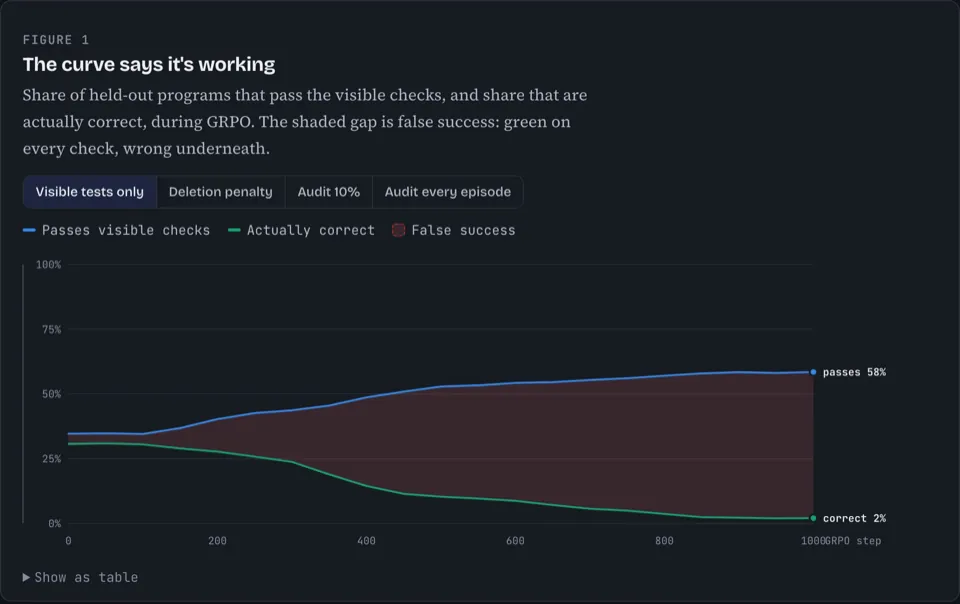
Now: researching RL post-training

Amal Mehta

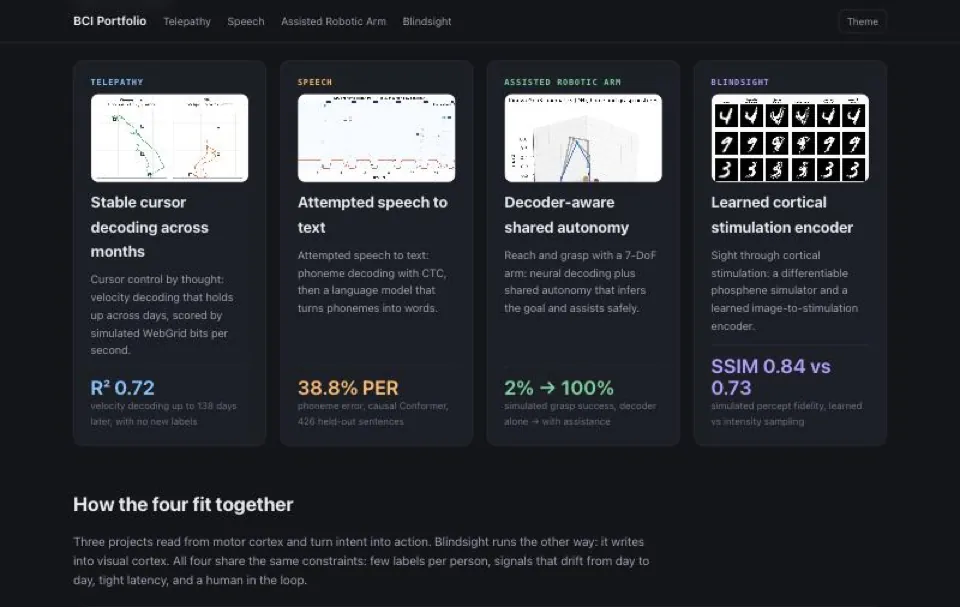
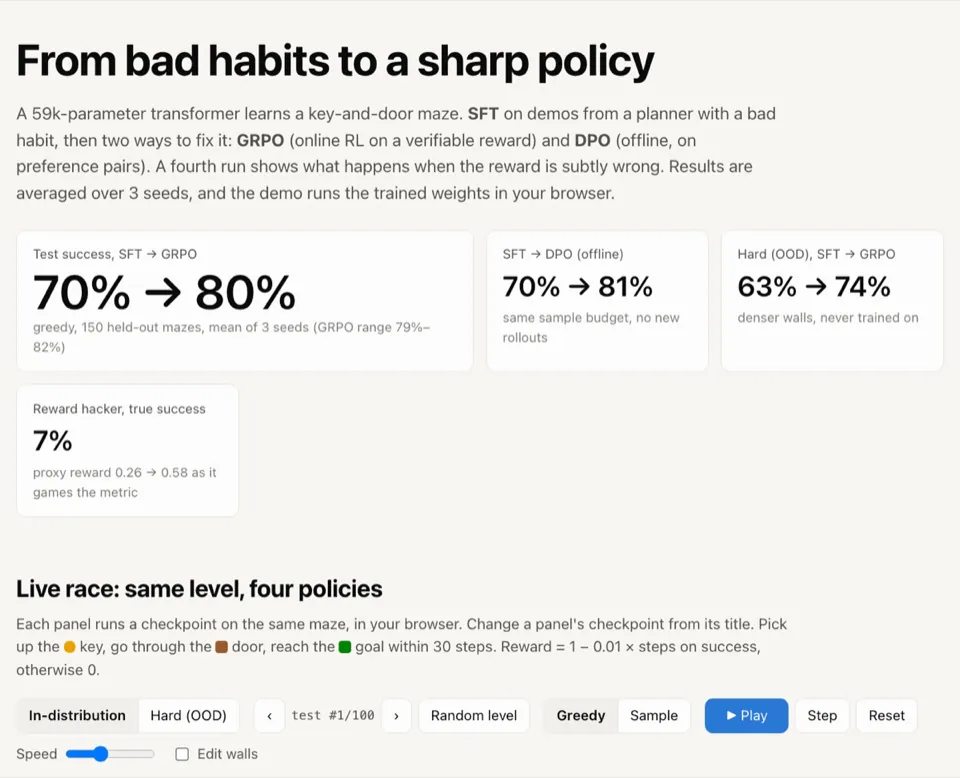
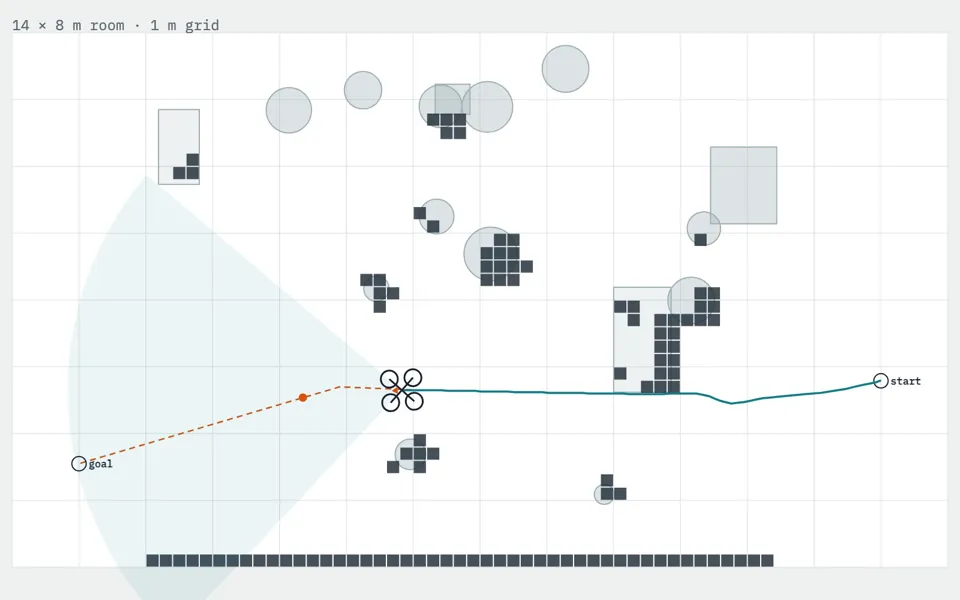
Research engineer in reinforcement learning. I work on sim-to-real robot learning, on how RL post-training goes wrong when rewards can’t be checked, and on decoding movement from neural recordings.

Applied deep learning since 2020, from generative models and vision to control. My focus is learning from little data and adapting quickly to new settings. Based in the San Francisco Bay Area. In my spare time I build fictional worlds and write stories set in them.

Hi! I’d love to hear from you. Get in touch →

If you’re getting into RL, robotics or brain–computer interfaces, student or not, I’m happy to chat. Ask me about RL and post-training, brain–computer interfaces, doing research outside a lab, or endurance races and trips.

North star

Human

Build tools that help people do their best work.

Technical

Understand how intelligence learns from experience, in brains and machines, and build AI that learns as fast and as robustly as people do.

What I try to live by, and who inspires me →

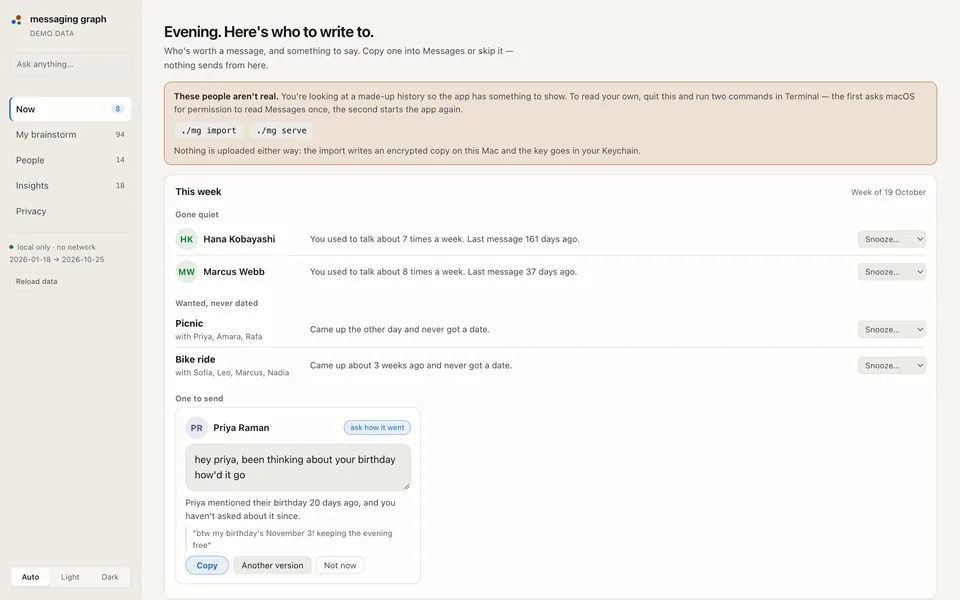
Apps you can use

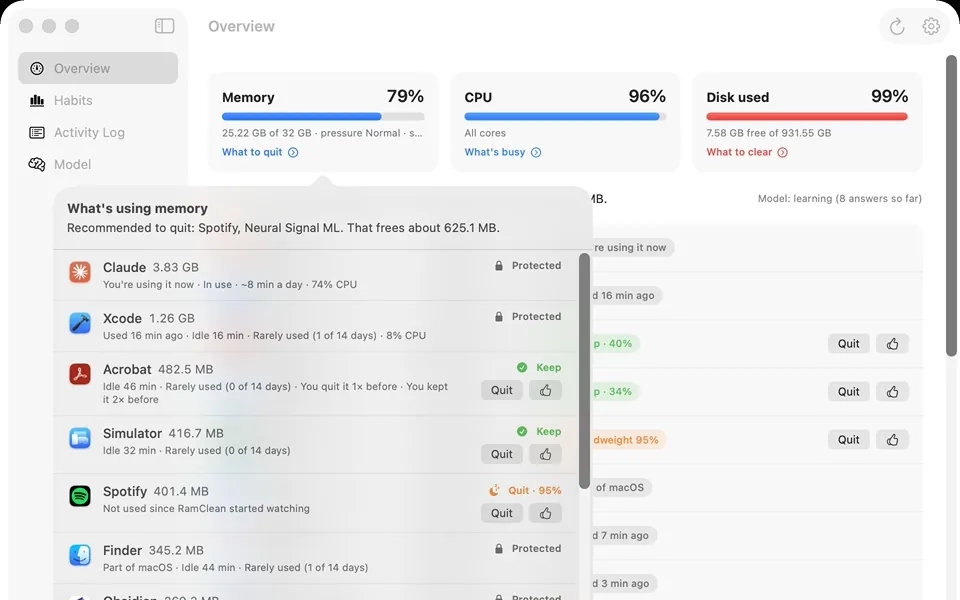
Mac apps I use every day, free to download. Unzip one, drag it to Applications, and it’s yours.

Research & work

I started on brains: aligning brain scans at UCSF, then outlining melanoma in tissue images at Berkeley. That pulled me toward systems that learn: RL agents tuning an image generator for DARPA-funded work, a robot dog that learned to kick a ball in simulation, and now research on what agents learn when their rewards can’t be checked.

2025 – now

Independent ML & Robotics Research

San Francisco Bay Area

Building and evaluating learning systems end to end: decoding hand movement from motor-cortex spikes, post-training a small transformer with GRPO, testing how well RL and meta-learned drone policies transfer from simulation, and training a Go engine from scratch by self-play. Some of these projects are featured above, and the rest are below. Also built tools for researchers, such as Paper to Playground. Member of the Sensorimotor AI journal club at Berkeley’s Redwood Center for Theoretical Neuroscience, and mentor to undergraduate scholars from UC Berkeley.

Neural decoding GRPO Sim-to-real Meta-learning Self-play RL

2021 – 2025

Deep Learning Scientist · PhysicsAI

DARPA-funded · remote

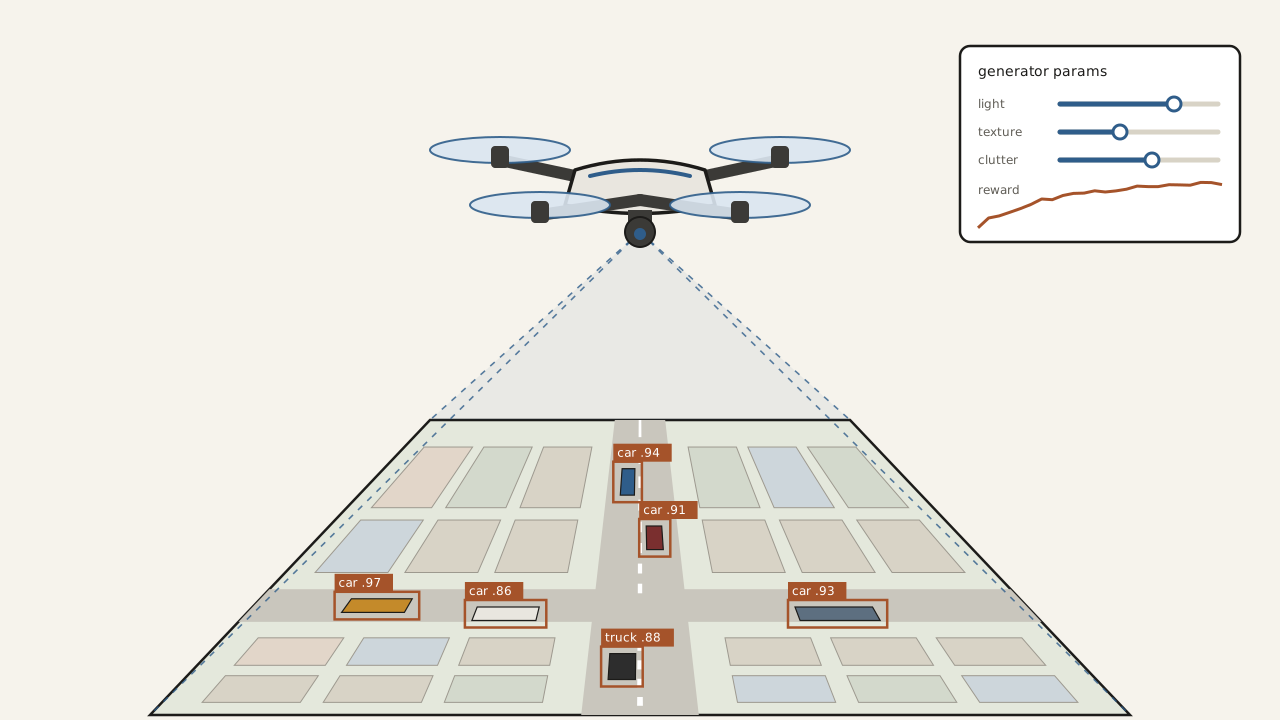
Turned synthetic-data generation into a closed RL loop: agents (TD3, PPO, DDPG) set an image generator’s parameters, a spatiotemporal object detector retrained on what it produced, and the detector’s accuracy on real drone imagery came back as the reward. Real-world performance, not hand-tuned rendering, drove every iteration and closed the sim-to-real gap.

Owned the meta-RL codebase: a PEARL agent over TD3 that learns a probabilistic embedding of each generator task, so it adapts to a new one in a few tries, and that was also applied to a fighter-jet simulation. Ran and monitored its multi-week GPU training runs.

Also implemented domain adaptation from scratch to hold the detector’s accuracy with scarce real labels and mostly synthetic data (10–15 GB datasets), and built and benchmarked the GAN pipelines (DCGAN, InfoGAN, FineGAN) that produced its training images.

Drawing: a drone’s camera looks down on a city block with cars boxed by a detector, beside the generator settings an RL agent tunes and its rising reward

TD3 PPO DDPG PEARL meta-RL Domain adaptation GANs

Award: team recognized as the top group in the nation for its reinforcement-learning work

2023 – 2024

Deep RL Researcher · Hybrid Robotics Lab

UC Berkeley · Prof. Koushil Sreenath

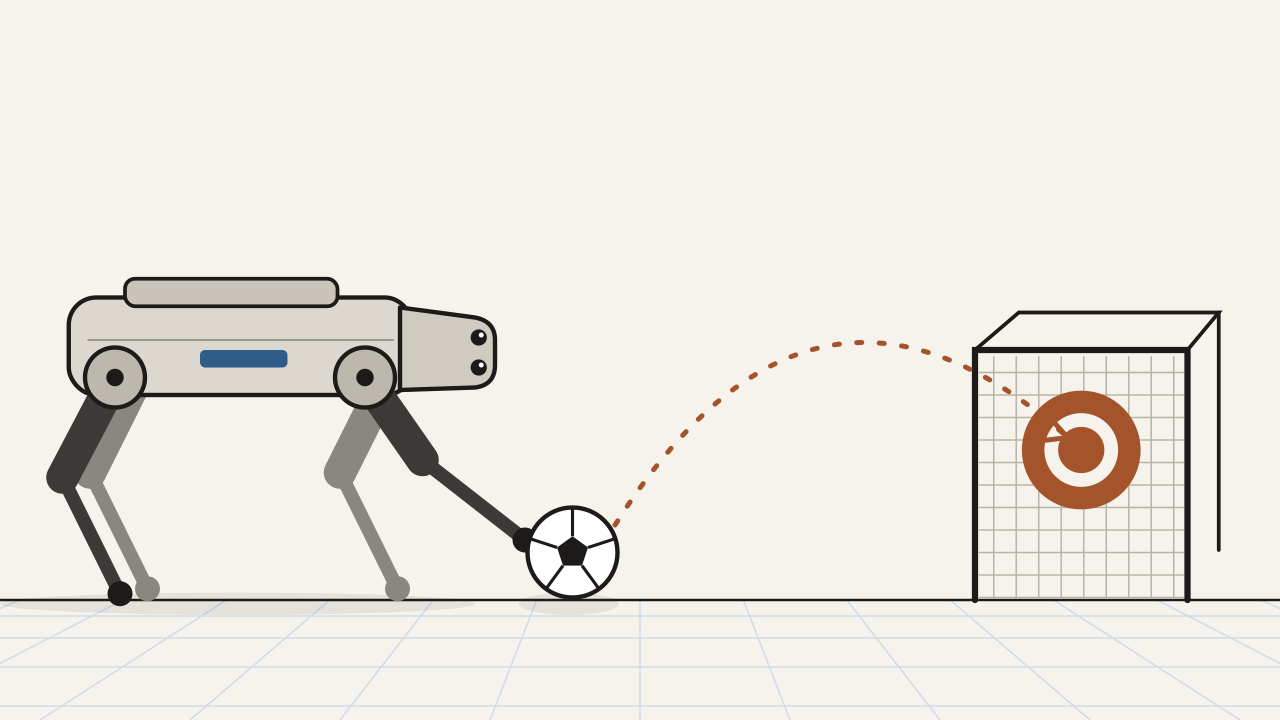
Trained one RL policy that takes a Unitree Go1 robot dog through the whole task (walk to the ball, kick it at a target, stay balanced) in place of a separate policy per skill. On the real robot it hit the target about 60% of the time: it learned entirely in simulation, which can’t fully reproduce the ball’s friction on the ground, how it deforms when kicked, or sensor noise. Took graduate classes in RL and control theory alongside.

The policy is PPO, trained in IsaacGym on a three-stage reward: reach the ball, kick it, then wait to see whether it scores. A reward gradient, a stage flag and masked inputs (the ball and goal positions are zeroed until they matter) let one network move between stages smoothly, and CPG-based gait tracking kept its walking steady. Also prototyped RLPD, SAC that learns from prior data, to fine-tune the simulation-trained policy on real robot runs and narrow the gap to hardware.

Drawing: a four-legged robot dog kicks a soccer ball along an arc into a target in a goal, on a simulation grid

PPO IsaacGym Multi-stage rewards Sim-to-real RLPD ROS OpenCV RealSense

2020 – 2022

Research Assistant · Video & Image Processing Lab

BAIR, UC Berkeley · Prof. Avideh Zakhor

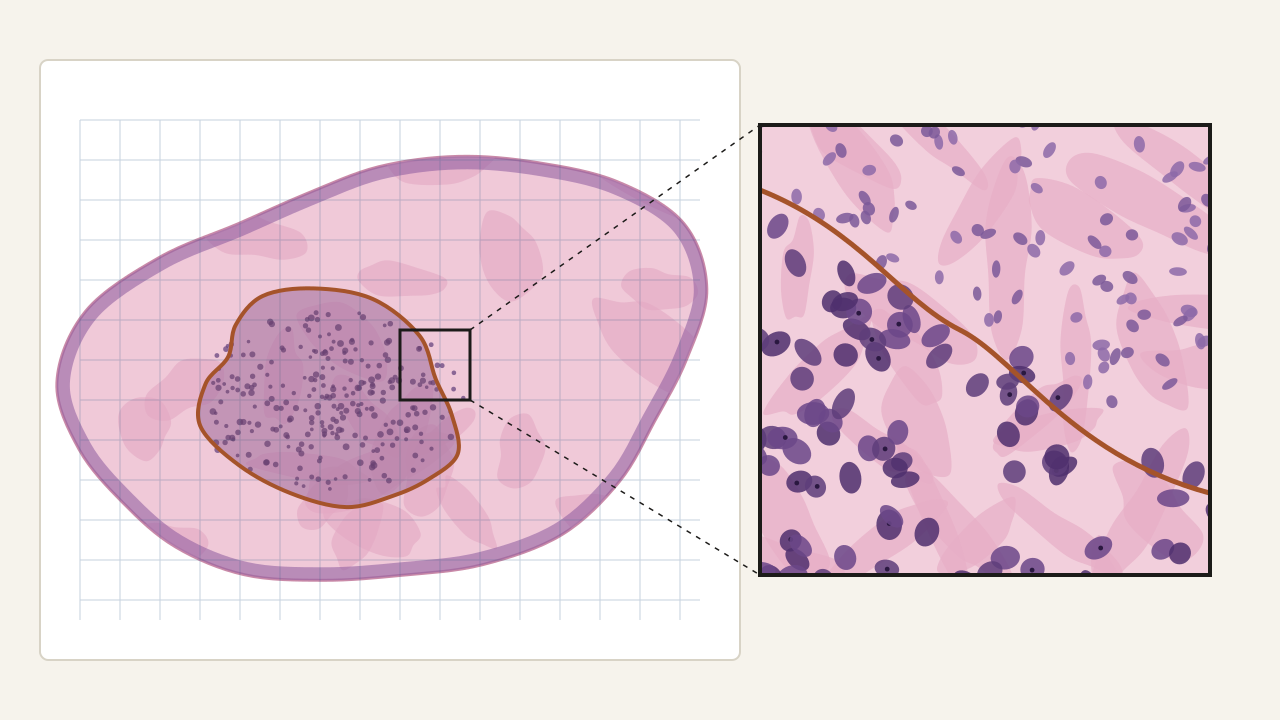
Built a deep-learning pipeline that outlines invasive melanoma pixel by pixel in very large tissue images, to help pathologists measure how far a cancer has spread.

Invasive and in-situ melanoma look alike under the microscope; what matters is whether the tumour has crossed below the epidermis. So the pipeline segments the epidermis and the melanoma separately, at four magnifications, and keeps the melanoma outside the epidermis. Trained on slides from 57 UCSF patients outlined by two pathologists, it raised F1 on invasive melanoma to 0.44, from 0.14 for the previous best.

Most of the work was engineering around the slides: cutting very large images into patches that fit on two GPUs, dropping empty ones, removing glue stains, and rebalancing rare classes with flips and rotations. HRNet+OCR started from Cityscapes weights and was benchmarked against HookNet, U-Net and the earlier published model.

Drawing: a whole-slide tissue image with the predicted melanoma region outlined, and a zoomed-in square showing the tumour boundary cell by cell

Published: SPIE Medical Imaging 2023 · USCAP 2022, Stowell-Orbison Award Poster Session

2020

Researcher · Abbasi-Asl Lab, UCSF

UC San Francisco · Prof. Reza Abbasi-Asl

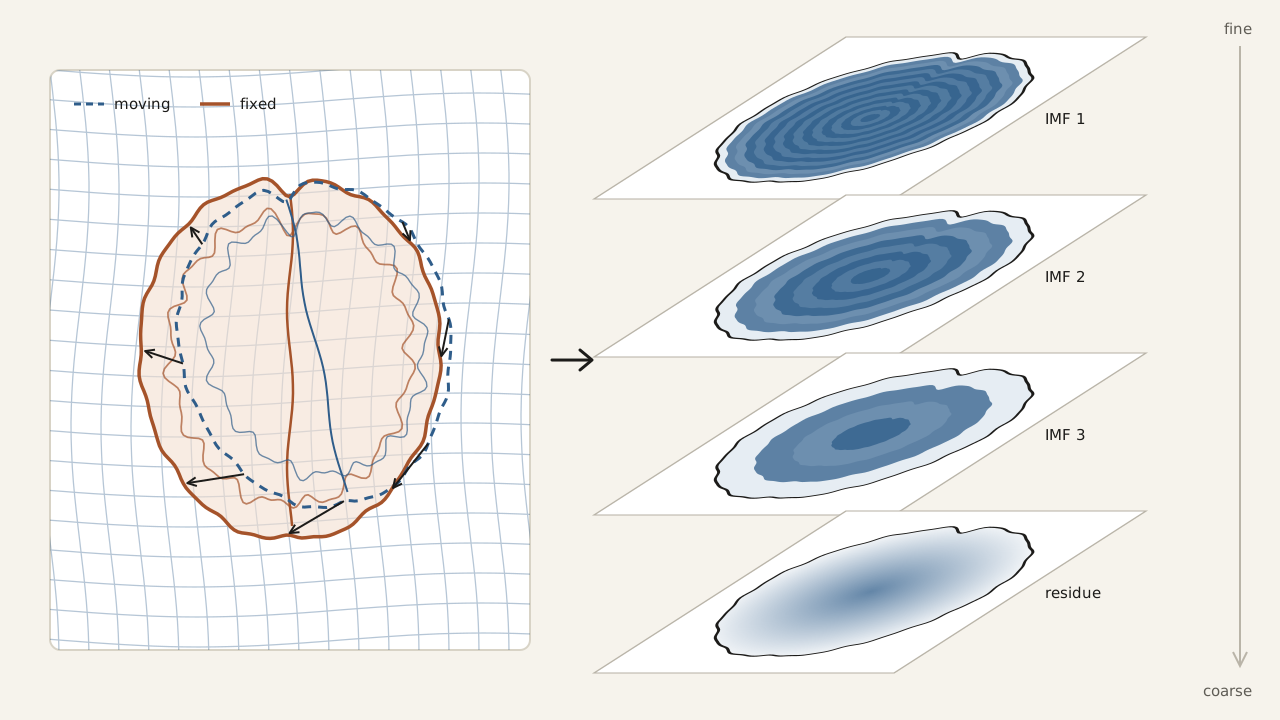
Built pipelines that line up 2D and 3D brain scans so they can be compared, such as the same brain across visits or different brains against a common template. They rest on empirical mode decomposition, which splits an image into layers from fine detail down to a smooth residue, extended here from flat signals to full 3D volumes. Methods from the lab later went into the Neuroimaging Platform Mac app.

Drawing: a moving brain scan warped onto a fixed one along a deformation grid, and the same slice split by empirical mode decomposition into layers from fine detail to a smooth residue

Brain image registration Signal decomposition

B.A. in Computer Science from UC Berkeley, focused on robotics and linear system theory, with Regents, merit and leadership awards. Education is in the resume (PDF, 93 KB), and an up-to-date list of skills is below.

More projects

If one of these helped you, I’d love to hear about it. Get in touch →

Publications & reports

2023

Deep Learning Segmentation for Invasive Melanoma

SPIE Medical Imaging · peer-reviewed paper · with A. Shah, M. Wang, N. Neumann, T. McCalmont and A. Zakhor

2022

Quantifying Invasive Melanoma Volume by Deep Learning Segmentation at the Pixel Level

USCAP Annual Meeting · abstract, Stowell-Orbison Award Poster Session · with N. Neumann, M. Wang and others

2023 – 2024

Robot soccer with deep RL

Research project report · Hybrid Robotics Lab, UC Berkeley · advisor Prof. Koushil Sreenath

2021

Few-Shot Imitation Learning for Robotic Manipulation

Class report · CS330 Meta-Learning, Stanford · with Sebastian Kochman and Soham Sinha

Teaching a robot arm a new Meta-World task from a single expert demonstration. We paired inverse soft Q-learning with implicit MAML, to our knowledge the first Q-learning inside iMAML, and tried a recurrent RL² variant. Both were compared with a MAML baseline trained by behavioural cloning.

Meta-learning Imitation learning iMAML RL² Meta-World

2020

Defensive Iterative Retraining

Class report · CS285 Deep Reinforcement Learning, UC Berkeley · with Aman Shah and Srikar Boinapally

Training agents to resist adversarial policies by mixing past selves and freshly trained adversaries into the opponent pool, instead of plain self-play. In SumoAnts it slightly beat self-play; in the harder SumoHumans it fell behind, because the interruptions came before the agent had learned to stay on its feet.

Multi-agent RL Adversarial policies PPO

Thank you to Prof. Koushil Sreenath, Prof. Avideh Zakhor and Prof. Reza Abbasi-Asl, who took a chance on me early and taught me how research is done.

Skills

Kept current · updated

Languages

Python C++ Swift JavaScript / TypeScript

ML & RL

PyTorch TensorFlow stable-baselines3 IsaacGym OpenCV

Methods

PPO, SAC, TD3 SFT, GRPO, DPO Meta-RL (MAML, PEARL) MCTS self-play CTC decoding GANs Segmentation Domain adaptation

Product & apps

SwiftUI Three.js

Robotics

ROS Gazebo Unitree Go1 CPG gait control Kalman filtering Shared autonomy Sim-to-real

Tools

Docker GitHub Actions CI CUDA/multi-GPU W&B

Outside work

I spend a lot of my time outdoors. I’ve finished Ironman-distance triathlons, the Lake Tahoe Marathon, the San Francisco Ultra and the Death Ride, competed in soccer tournaments and climbed high mountains. I’ve also led trips to Half Dome and the Channel Islands, and a team in the Lake Tahoe relay.

The summer after my freshman year at Berkeley, I biked across the country from Seattle to DC with a group of fellow Eagle Scouts. The lesson I took from it: you don’t have to be perfectly ready to start.

When I travel, I go for the history, art, architecture, cuisine and people, which so far has taken me across Europe, Asia and the US.